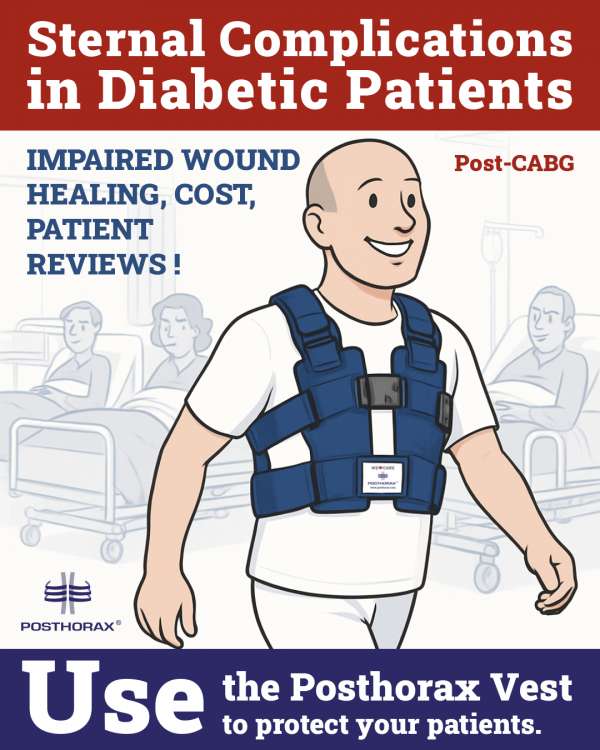
Diabetic Patients in Heart Surgery
Wound and Bone Healing Challenges, Complications, and Costs
Diabetic patients undergoing heart surgery face significantly higher risks of delayed wound and bone healing, leading to increased rates of infection, sternal dehiscence, prolonged hospital stays, and substantial healthcare costs. These complications are driven by metabolic, vascular, and immune dysfunctions unique to diabetes.
Introduction
Diabetes mellitus is a major risk factor for adverse outcomes in cardiac surgery. Patients with diabetes are more likely to experience problems with wound and bone healing after procedures such as coronary artery bypass grafting (CABG) or valve replacement. This article explores why healing is delayed in diabetic patients, the resulting complications, and the economic impact, with direct links to PubMed evidence.
1. Why Is Healing Delayed in Diabetic Patients?
A. Hyperglycemia and Metabolic Dysregulation
- Chronic high blood sugar leads to the formation of advanced glycation end-products (AGEs), which stiffen tissues, disrupt collagen, and impair cellular repair mechanisms (https://pmc.ncbi.nlm.nih.gov/articles/PMC8432997/).
B. Immune Dysfunction
- Chronic inflammation and poor immune response delay the transition from inflammation to tissue repair (https://pmc.ncbi.nlm.nih.gov/articles/PMC12321782/).
C. Impaired Angiogenesis
- Diabetes reduces the formation of new blood vessels (angiogenesis) due to endothelial dysfunction and decreased proangiogenic factors, limiting oxygen and nutrient delivery to healing tissues (https://pmc.ncbi.nlm.nih.gov/articles/PMC3348526/).
D. Disrupted Bone Metabolism
- AGEs accumulate in bone, weakening its structure and impairing mineralization (https://pubmed.ncbi.nlm.nih.gov/39173634/).
- Diabetes impairs bone cell function and blood supply, leading to delayed union and poor osteointegration (https://pubmed.ncbi.nlm.nih.gov/35418946/).
2. Wound and Bone Healing Complications
A. Wound Healing Complications
| Complication | Diabetic Patients (vs. Non-Diabetics) | Evidence/Notes |
|---|---|---|
| Sternal wound infection (SWI) | 2.7% superficial, 0.5% deep | Higher risk in diabetics (https://pubmed.ncbi.nlm.nih.gov/38500294/) |
| Delayed wound healing | Median 1.7–1.9 months | Some cases >1 year (https://pubmed.ncbi.nlm.nih.gov/38500294/) |
| Surgical site infection (SSI) | OR ~2.03 higher risk | (https://pubmed.ncbi.nlm.nih.gov/40364268/) |
| Mortality from deep SWI | 15–20% | (https://www.annalsthoracicsurgery.org/article/S0003-4975(03)01344-2/fulltext) |
Key Mechanisms:
- Poor glycemic control, immune dysfunction, and impaired angiogenesis all contribute to higher infection rates and delayed healing (https://pmc.ncbi.nlm.nih.gov/articles/PMC8432997/).
B. Bone Healing Complications
| Complication | Diabetic Patients (vs. Non-Diabetics) | Evidence/Notes |
|---|---|---|
| Sternal dehiscence | OR 2.4 higher risk | (https://pubmed.ncbi.nlm.nih.gov/30993919/) |
| Delayed bone union | ~40% healing vs. controls | Animal models (https://pubmed.ncbi.nlm.nih.gov/12765963/) |
| Impaired fracture healing | OR 2.11 (1.33–3.37) | (https://pubmed.ncbi.nlm.nih.gov/32255244/) |
Key Mechanisms:
- AGEs and disrupted bone metabolism weaken bone and slow healing (https://pubmed.ncbi.nlm.nih.gov/39173634/).
3. Possible Complications
- Infections: Higher rates of superficial and deep sternal wound infections, mediastinitis, and sepsis (https://pubmed.ncbi.nlm.nih.gov/38500294/).
- Sternal Dehiscence: Instability of the breastbone after surgery, leading to pain, infection, and need for reoperation (https://pubmed.ncbi.nlm.nih.gov/30993919/).
- Delayed or Non-Union of Bone: Prolonged healing or failure of the sternum to heal, increasing risk of chronic pain and disability (https://pubmed.ncbi.nlm.nih.gov/12765963/).
- Prolonged Hospitalization: Extended ICU and hospital stays due to complications (https://pubmed.ncbi.nlm.nih.gov/21914173/).
- Increased Mortality: Deep sternal wound infection mortality rates of 15–20% (https://www.annalsthoracicsurgery.org/article/S0003-4975(03)01344-2/fulltext).
- Reoperation and Readmission: Higher likelihood of needing additional surgeries and hospital readmissions (https://pubmed.ncbi.nlm.nih.gov/21914173/).
4. Economic Impact and Healthcare Costs
| Complication/Intervention | Incremental Cost per Case (USD) | Additional LOS (days) | Notes |
|---|---|---|---|
| SSI after cardiac surgery | $18,626–$20,979 | 7.8–9.3 | Includes index admission, readmissions, outpatient visits (https://pubmed.ncbi.nlm.nih.gov/21914173/) |
| SSI post-discharge (8 weeks) | $5,155 vs. $1,773 | N/A | Outpatient and home health costs (https://pubmed.ncbi.nlm.nih.gov/21914173/) |
| Readmission (30-day, all-cause) | $16,037 | N/A | Mean cost for adult hospital readmissions (https://pubmed.ncbi.nlm.nih.gov/21914173/) |
| Revision surgery for SSI | $116,342 (median) | N/A | 50% of SSI cases required reoperation (https://pubmed.ncbi.nlm.nih.gov/21914173/) |
| Annual per-patient CVD cost (T2DM) | $3,418–$9,705 higher | N/A | Compared to T2DM without CVD (https://pubmed.ncbi.nlm.nih.gov/21914173/) |
Key Finding:
Preventive strategies such as strict glycemic control and negative pressure wound therapy are cost-effective, reducing both complication rates and overall healthcare expenditures (https://pubmed.ncbi.nlm.nih.gov/21914173/).
Conclusion
Diabetic patients undergoing heart surgery are at a markedly increased risk for delayed wound and bone healing due to metabolic, vascular, and immune dysfunctions. These delays lead to higher rates of infection, sternal dehiscence, prolonged hospital stays, and increased mortality. The economic burden is substantial, with each complication adding tens of thousands of dollars to healthcare costs. Evidence-based interventions—especially strict glycemic control and advanced wound therapies—are essential to improve outcomes and reduce costs in this high-risk group.
Contact:
EU +421 (0) 940 269 102
USA: +1 (407) 505-9357
WhatsApp Link: https://wa.me/421940269102
Email: info@posthorax.com
Web: www.posthorax.com


